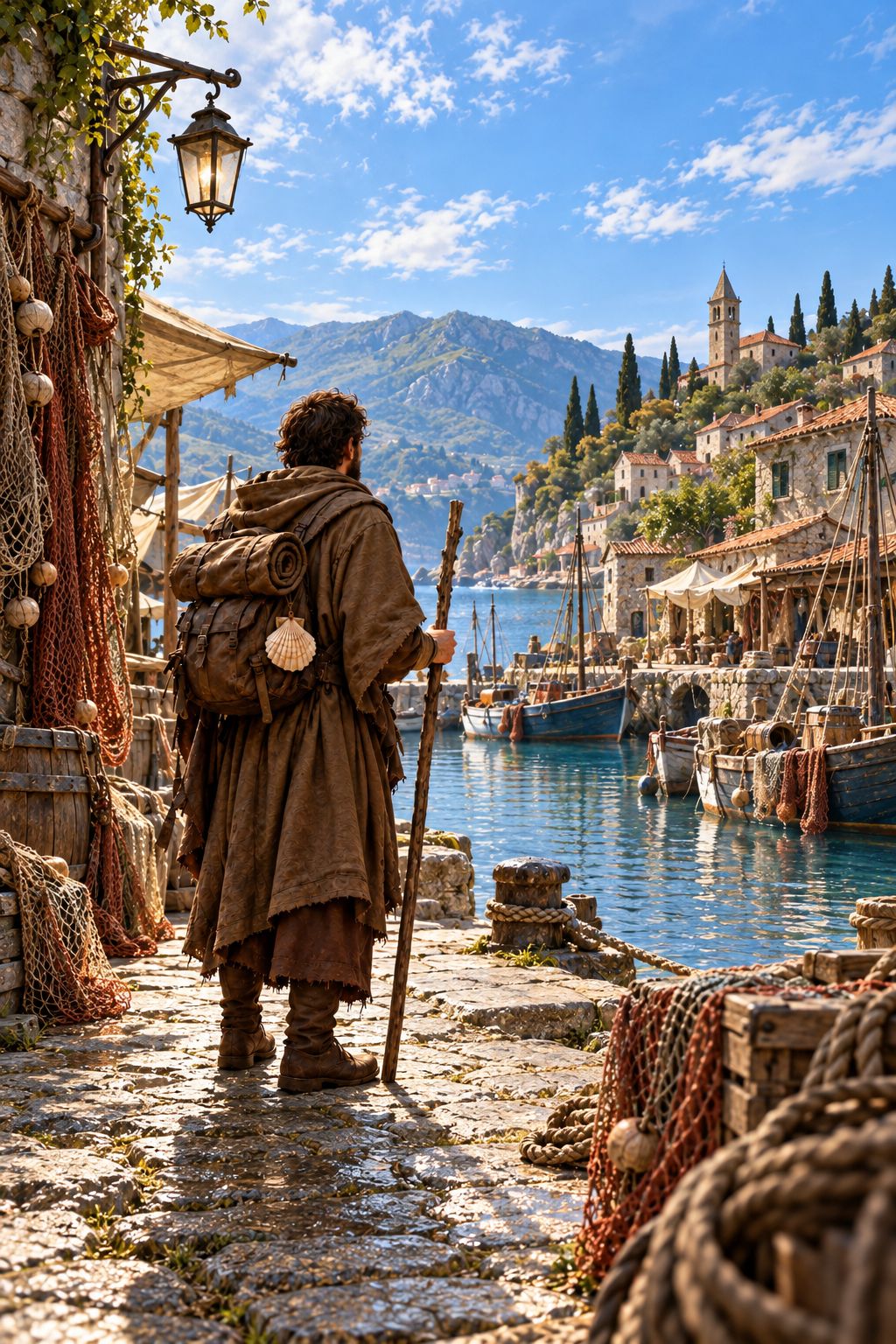
There once was a pilgrim who walked the same road more often than any other.
It ran between two hills. On each hill stood a house. In each house, a light was on.
Where the road forked, someone had pinned a child's drawing to the signpost: two houses, a sun with too many rays, and a very tall figure holding a very small hand.
Two houses.
One road between them.
Walked every other weekend, and on Wednesdays.
Travelers sometimes stopped at this fork. They had heard there was a story here. Something sad, perhaps. Something worth gossiping about.
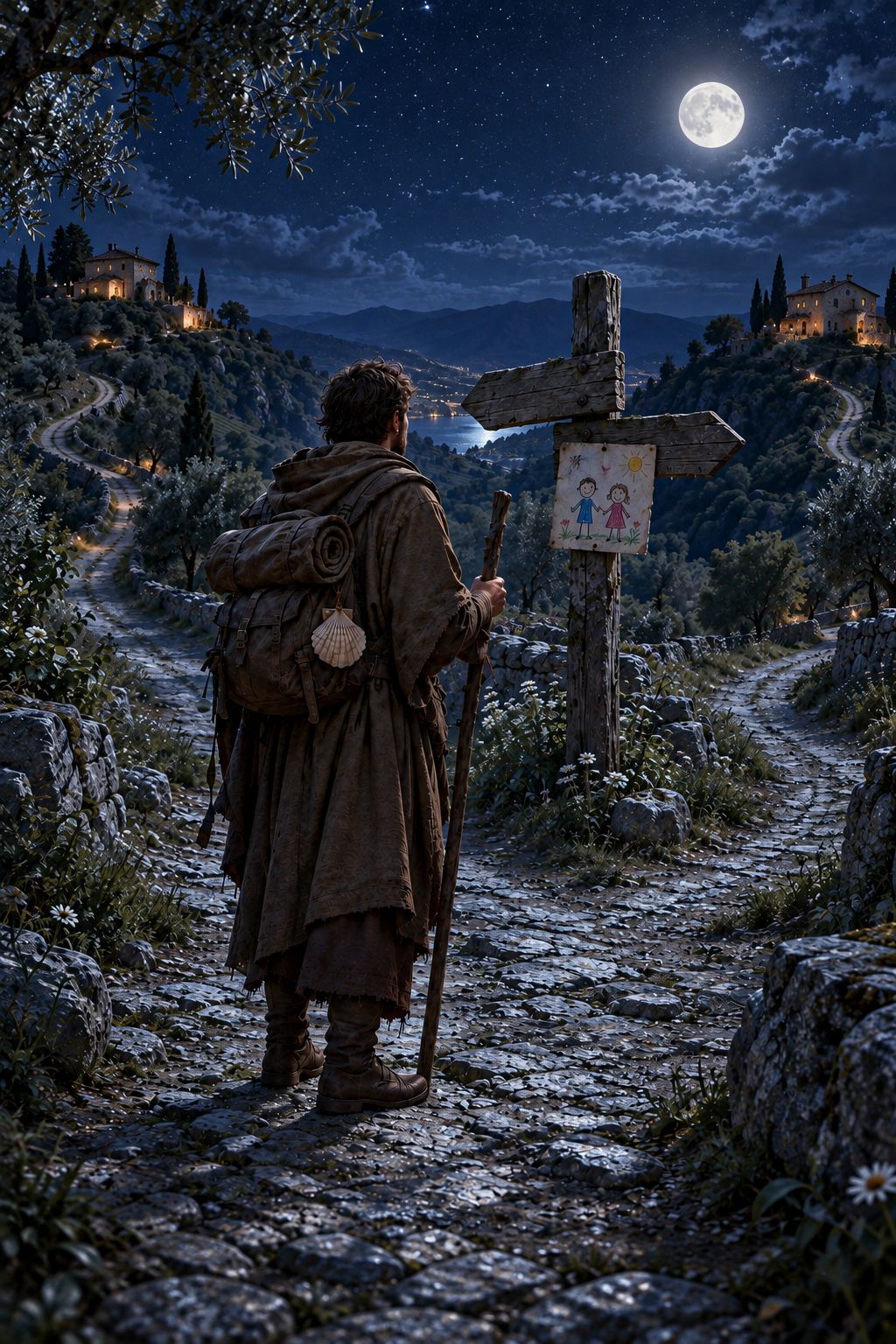
But there was no story for them.
There was a bench by the road with two cups on it, one large, one small. There was a little backpack hanging on a nail, packed and ready. On the roof of one of the houses, a small black box blinked blue, so that a video call could happen at bedtime.
The pilgrim did not explain. He did not complain. He simply walked the road, picked up the small hand, and carried the backpack the rest of the way.
The travelers waited for drama. They got a tired man with a lunchbox.
And slowly, the travelers understood.
A fork in the road is not a broken road.
Two lit windows are still light.
And a father on the way is not a story for strangers.
This is no confession. No battlefield. No advice column.
It is a road between two homes, walked by someone who loves the small person at either end.
Nothing more. And nothing less.
So, Traveler —
There is no drama here.
No sides to take.
No story for the road.
Only a dad, on his way.
Go home, pilgrim.
And on the bench, two cups stood side by side.